Sunday, August 23, 2015

inside/out/food

NOTE: This post about Disney-Pixar's Inside Out contains spoilers.


About a week ago, I traveled to Nebraska to visit family. As a tradition, we always go to the movies together. 

catch the flicks
see the sights

Even the twenty-five-year-old in our cousin bunch was set on Disney/Pixar’s latest production, Inside Out; even the twenty-five-year-old pleaded for tissues by the end, a popcorn bag becoming ersatz Kleenex. 


As the studio conglomerate’s first psychology-conscious film, Inside Out embraces the complexity of everyday emotions—especially those experienced by a pre-teen unaware of impending puberty. The movie’s psychoanalysis—sans a Freudian couch—begins with a zooming in on the characters’ head-quarters, or brain. Inside, five key emotions hover over a control board, waiting for a turn to govern it. In Riley Andersen, the eleven-year-old protagonist, Joy is often at the helm. 

she's the blue-haired pixie-lookin thang up above, but if you don't recognize that, I suggest watching the freakin film

Throughout Riley’s mid-pre-life crisis, she experiences a whirlwind of emotions, to be expected. Her coming-of-age is nonetheless heartwarming, but what my own analysis of psychoanalysis centered on was the portrayal of Joy; she’s yellow and glowing, donning a summery green dress. She’s often jumping about and smiling, marveling at Riley’s experiences, playing Dr. Pangloss at the unfortunate ones. But she has blue hair. In fact, her pixie do is the same shade of Sadness’ hair, who is completely blue. The very tip of Joy is Sadness.

After mulling over emotional complexity in a cavernous G-rated theater, I went home and searched Reddit.


As usual, the a forum pushed me even further:

Question: “Since Joy has blue hair, does that mean that there is a little bit of sadness in joy?”

The user with the greatest evidence of family movie-brooding is rewarded to SunshineAndGoldfish: 

I think you might be on to something. If we take it a step further...

Joy's Colors: Yellow body- Joy Blue Hair/Eyes/Eyebrows/Flowers on Dress- Sadness Green dress- Disgust Red Tongue- Anger Purple Lips- Fear
For extra credit:
Disgust has Purple lips, scarf and shoes. I am having a hard time telling if her tongue is Purple too or Pink/Red.
Anger has Yellow flames, Purpleish pants and it looks like the zig-zag of his tie has a Blue tint to it (possible Green).
Fear has Blue stripes on his sleeves and a Red tongue
Sadness has Purple glasses and a Red Tongue


Self-titled Disney/Pixar Fans deserve some sort of credibility, and so do their own answers:


I would also argue that the blue hair symbolizes that the two share a special connection. A huge theme in the movie is that emotions are not single shades but rather a mixture. This is most notable in that without Sadness, we cannot properly appreciate Joy.... Both as characters and as emotions.


Rabbi Geoffrey A. Mitelman expands on the question, relating it to Jewish philosophy: There is no such thing as “pure joy.” Happiness is borne by sadness.

(click on the photo for a debate on the subject)


Rabbi Mitelman includes a snippet of a New York Times review:

"The movie suggests that the bittersweet is a step up from untarnished joy and shows how frantic cheerfulness can stand in the way of genuine connection."

With that said, Joy would look terrifying without a little sadness anyway:


as for food, make an egg. poached

Saturday, August 8, 2015

periscope//honeydew ftw//are you organs really so cozy

Lately I haven't been blogging too much about food--check out Periscope, a relatively new app that allows you to broadcast and receive comments live. I do some cookin' through that

and take pictures of myself in glasses.

Periscope name: @SmileForMeBabyG 
Most recent broadcast: "how do you like your oatmeal?"

~~~~~~~~~~~~~~~~~~~~~~~~~~~~~~~~~~~~~~~~~

“Yeah, natural birth is SO much better.
do you hint sarcasm in that?

THE OTHER DAY in human biology class we were talkin about Cesarean sections. Also known as C-sections, they are the surgical processes by which babies are born.

What is the process? The wall of the mother's abdomen is cut through to reach the baby.

This is an image of a C-section delivery from a page titled: "6 Things I Aish I'd Known About Having a C-section." It is somewhat graphic, so don't click on it if you prefer cantaloupe to honeydew. 


So, that sarcasm came from a woman who, in class, sits to my right; she's a mother of three. 

A coupla us were discussing C-sections (when i say discussing, I mean sharing and shrieking at what we've heard about C-sections). Someone said that those "things," mothers' organs are taken out and placed to the side. after the baby is removed, doctors supposedly relocate the table-restin' intestines right back to where the...started.

Ewwww! we said, furrowed brows and all. Placing a mother's organs to the side?!

Wise mother to my right: “Yeah, natural birth is SO much better."

From all I have heard about traditional childbirth--both with and without epidural--hey, she may have a point. What would feel worse, anyway?


Photo by Ashley Marston, Birth & Lifestyle Photographer from Vancouver, Canada. Check out her page for her captivating signature, among other things:

http://www.ashleymarstonbirth photography.com/

today i decided that i am naming a child Elwood. the inspiration came from the extended version of Apocalypse Now (check out embedded link); the New Orleanian, Jay "Chef" Hicks (Frederic Forrest--what a name) mentions an Elwood when reading a letter he was writing home about almost being devoured by a tiger. He's a real nervous character--"strung too tight," Capt. Ben Willard (Martin Sheen) describes. but he seemed pretty chill to me.

"I JUST WANNA LEARN TO COOK, MAN!" (what he says after his tiger exposure)

The Chef's mention of Elwood got me thinkin' back to The Blues Brothers. Elwood is tall. I'm tall. I'll name my child Elwood--thanks to multiple layers of media-related inspiration, and the desire to embrace the length of my bones.

Having a child is quite narcissistic. Not saying there's anything wrong with being self-centered when there are both the cultural and survival imperatives to reproduce haploids of ourselves. But I recall Lucy from Across the Universe--a movie plotted around Beatles songs (is the band old enough to evade italicization?)--telling a friend that she would never have kids because it's too narcissistic.

I think I'd like to adopt, anyway. 

I get the feeling that you, reader, are laughing.

I'm taking myself too seriously.

No, the inspiration does not come from Angelina Jolie.

You've thought about this before--having children and all.

Especially when you're studying the reproductive system in a human biology course--sitting in the classroom, bookended by mothers--you think about it a lot.

~~~~~~~~~~~~~~~~~~~~~~~~~~~~~~~~~~~~~~~~~

p.s. i really recommend the extended version of Apocalypse Now; interesting commentary on the French legacy in Vietnam. 

For more photos by Ashley Marston, I recommend her "Story Telling Sessions." She really has created a vocation for herself that I've never heard of before. Birth & Lifestyle Photographer:

http://www.ashleymarstonbirthphotography.com/work/story-telling-sessions/nggallery/image/1e4a6788-jpg/

Monday, August 3, 2015

emotional base//

Taken from the lovely textbook, Human Biology: Concepts and Current Issues, by Michael D. Johnson in combination with Pearson. 7th Edition.

HERE lieth the limbic system, 
at the base of the cerebrum.

if every neuronal pathway passes through it
and the cerebral cortex
(complex decision-maker, we call it)
rests on top--
it makes sense why we attach emotion to most things

but upon the rush-on of full-fledged feeling
do our brains implode into themselves?
do they go deeper
function deeper pulsate 
deeper
in there: the green you
see in the diagram.

It would be, then, that counting Wednesdays--
running to a train 
mark a certain cranial ascendance. 
a focus on the decision making without the heart strings.
Our brain descends along with the sun--you nightcrawlers, don't you feel the midbrain buzzing?
at night I believe we press into ourselves
{and at the occasion of any midday quagmire}
iambic pentameter to limbic, if it gets you.

cranial activities sink with the sun.

imagine.

Sunday, July 19, 2015

answer//respond//Purkinje fibers could be a good band name.

respond or answer?

last week, I began a Human Biology course at a city college. To welcome her students to the content, the professor began by asking a series of general questions.

"What do humans do to survive?" was one of them.

I thought of donuts. Then I really thought about them; the archetypal fried "O" haloed by questionably-strawberry-definitely-pink icing, and sprinkles. 


Then I thought about Bostonian vernacular--about how chocolate sprinkles are referred to there as "jimmies." But I'd rather have rainbow ones on my pastel, faux-fruit glaze.


  eh it's really not all that great


  that's different.

Anyway.

In the five minutes she kept us guessing, we stressed the same answers while increasing in frustration. they were:

1.) "answer"

2.) "adapt" 

3.) by God I even tried "regulate"

"to survive, we regulate everyday."
in some way.

Our top three answers, as a class, yielded no approval from the professor. So why did we keep repeating them?

Breaking it down, blogolysis style:

(the breakdown of chemical compounds is referred to as hydrolysis~~see what I did there~~)

2.) maybe we kept howling "adapt" because the term is vaguely sciencey; Darwin was a guy.

3.) maybe I yelled "regulate" (followed by a bashful giggle--I dont know why I felt embarrassed but I kinda do) because homeostasis was on my mind. homeostasis is the one and only bae, truly.

1.) "Answer" was the most common response. It seemed unquestionable that answer was the answer; we chorused it with momentous frequency, maybe convinced that the professor couldn't hear.

after we learned that the answer the professor was looking for was respond ("humans respond everyday to survive"), our obsession with "answer" seemed to make sense. "Answer" is:

a.) direct, like many of us have come to expect the responses of this world to be. when you connect to WiFi, it's frustrating sitting around, waiting for the little signal waves to figure themselves out.


b.) connotative of clarity. when movie plots are mysterious and hard to understand, they seem unnecessarily obscure compared to the directness of action movies or billion-dollar blockbusters


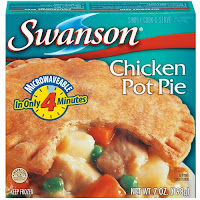
c.) immediate. why spend time on a thirty-minute meal when your microwave pot pie could go through all the stages of matter in four minutes?


so much of what we experience simply requires pressing a button. survival, however is day by day; no, as a population we haven't adapted to keep up with what we've created and maintained.

I made these the other day, they are vegan and gluten-free.

but i didn't take pictures because i wanted to avoid pushing buttons. these are taken from the website (link embedded in the images):


now here i come, pressing an alphabet.

Purkinje fibers could be a good band name.

Friday, July 3, 2015

photography//quotes\\Mo

i am a typewriter to-day.
a few years ago, i dropped photography because i thought it wasn't productive.


holy hallelujah baby, nothing is.

it ached not to take pictures; i dulled the yearning with other things.
so much that i couldn't identify what the longing wanted.

what do i want from myself?

By picking up a camera again, I re-learn what seems to leave me every time I learn it: you are your own worst enemy.


sure it sounds morbid, but anything can sound morbid:


this face saying "strawberries." 
it looks like it's on the tip of its tongue, anyway.

so my point is that to brush off this maxim, this saying as "too morbid" can sound morbid, too.


so look into my eyes


and listen to me say "you are your own worst enemy"

you're not actually going to hear me say it, but you can listen to Bible Belt:

(the turning point of this moral story is indicated by a turn of typeface)


So, myself not picking up my camera, continuing to believe that photography just gets in the way--was the enemy. How a life can change by a shift in thinking.


When re-teaching myself the mechanics of a DSLR, I found myself on 


From a posted titled, "5 Tips to Take Less Photos of Everything and Take More Photos that Mean Something":

There is a whole world of events that are unfolding in front of us at each moment. Your awareness of them is subject to your willingness to be aware of them, not the existence of them.

It is my choice, then, to pick up a camera, and create what could otherwise go unseen. The product doesn't have to require a split-second capture; it can be a way of looking at something, a slanted view, an angled perspective--


the "mundane" made remarkable--


or a face that can blast its own inhibitions through experimentation--


selfies do not have to be shameful

an advantage of having a face, I believe, is being able to play with it. portraits can raise tensions, erect lifelong insecurities--but your face is your face. allow yourself to be a peeping Tom of your eyes. 

looking at my face, embracing its bumps, its angles, its rough patch of skin here, its rounded edge there--helps me stop being afraid of it. It is a piece of art. It is abstract, and can be broken down, admired, critiqued, positioned. A comment about a face doesn't have to tear raw nerve endings. It is just a face, it is not all of you. 

And it can make things interesting.  


holy hallelujah. i dont have to be afraid of you anymore; i can bring the cosmos to you and launch my qualms to them

I feel that as you are reading this, you feel you already know all of it. All the life lessons. I'm not blaming you, because even as I write, I am sickened by the worn out quotes.

"you are your own worst enemy"
"the world is unfolding"
"make the mundane remarkable"
"believe in yourself"

But we need to come back to them, sicken ourselves with their sugary coated bloated yuckiness; we need them in moments that feel like deep dark deathly hallows harry potter.


death rejoices at lollipops. if sugar quells the emptiness of feeling, alright. ok. ill take all the trite quotes. people think themselves geniuses for penning them; ill pass through them and hold on for a little while, hoping they make a mark of some sort,
so i dont have to travel as far back when i need them again.

~~~~~~~~~~~~~~~~~~~~~~~~~~~~~~~~~~~~~~~

You know those little symbols, often found in novels, that signify a turn in mood or story, thereby exempting the writer from using a considerable chunk of paper space?


http://www.pw.org/content/bon_app_tit_how_food_writing_fed_my_fiction


That clip is from an editorial.
The symbol comes after some vague profoundness is divulged.
That was where the artistry came in.

I'd like to disparage the gall I find in following an empty claim with a floaty I'm-whirling-around-in-the-genius-of-my-last-statement badge, but I won't. Even though I just did.

What's more, I just used the same trick above.
~~~~~~~~~~~~~~~~~~~~~~~~~~~~~~~~~~~
Because we sometimes need symbols to bore in a point.

If the author feels that his proclaimed firmament deserves a squiggle from the heavens, yes, hallelujah, power to you.

we use what we can to help ourselves believe in something else.
whatever it is.


Wednesday, June 24, 2015

Shamir//expectations//extraordinary

"It doesn't get darker unless you expect it to."

https://www.youtube.com/watch?v=0XoGrh9eL9Y


A few posts back, we discussed "the banality of evil," a term coined by Hannah Arendt. 
It refers to the simplicity of "evil" acts; sometimes people kill others for the sole purpose of making money.
Adolf Eichmann, who Hannah Arendt observed during his 1961 trial in Jerusalem, organized the Nazis' train schedules--he planned the shipment of prisoners to concentration and extermination camps. 

But what if he wasn't ideologically committed to Third Reich maxims? What if he didn't believe in the superiority of the Aryan race?

Does that make him any less evil than Reinhard Heydrich, Reichsprotektor or head of the Protectorate of Bohemia and Moravia (modern-day Czech Republic), who spoke outright of the inferiority of all other races?

Is Adolf Hitler "evil" for what he did?
He rationalized his ideologies in his head. They made sense, somehow.

What if these three men committed "evil" for everyday reasons, just like someone mugging another on the street, trying to make some cash to feed a family?

I don't condone these crimes; I just think it's important to look at them through more than one dimension, and not to hasten characterizing the wholes of individuals by their acts.

We are much more intricate than that.

And I put evil in "" because I don't know what to call it.

ANYWAY

Today on an elevator, thinking of Arendt, I thought,
banality of good.

Think about it. On streets we pass samaritans and CEOs, hear them talk on phones. These two archetypes have done "good" in two archetypal ways. They have:

1.) Saved lives/supported others through struggle, even in the smallest ways (I'll call this "humanitarian good")
2.) Become financially successful and/or societally esteemed (and this, "the capitalist's good"...lol)

Again, these people are everywhere. Maybe I'm preoccupied with anonymity because I'm back in New York City.

And I'm distancing myself from humanity (and hoping that you, the reader do so for the remainder of this post, too) because I dig writing like I'm not part of humanity; like I'm a wide-eyed observer. 

We all observe, and often respond with inflections of the tongue or compassionate countenances. I'm responding with a manifesto.

 So, these particularly exceptional people--we may overhear them complaining to their mother on the phone, gossiping to a friend on a park bench, whispering under the sandpapering of leaves--exceptional people don't have to be exceptional all the time, and that fascinates me.

Or we may see a billionaire drop his Mister-Softee-vanilla-sprinkly-cone on cement, get showered by the Washington Square Park fountain, be unable to conceal her sweaty pits.

How can someone who's succeeded in life, done something many college kids I know are anxious about (made money), be so...normal. It doesn't match my gleaming idea of 

(I love you stock)

Not that I value the title "CEO" above any other financial status/vocation. The extreme success of its reputation, however, fits to dispel my illusions with the greatest magnitude; the name makes the banality of good, or normalcy, pure humanity of the "good" individual, even more banal.

The tugs between society and the individual.

Is good banal, then? Is anything banal?

Recently I read a quote: "Their lives would have been an art of living" (Perec, 23).

How is any moment less than extraordinary?

The fact that I ask this question leads me to reason one of my greatest pet peeves.

when I hear life brushed off like it's nothing, I feel dehumanized, dirty, saggy, wrong.
But I brush it off, too.

"How was your day?"
"Eh, whatever."

Maybe I'm afraid that it really is whatever.

Always, though, I come back to the extraordinaries.
Those who have done "good," but act like anyone else.
The contrasts between reputation and person are extraordinary.
Maybe we brush off life because we're subconscious and self-conscious; we know how extraordinary it could be if we just went about seeing it differently.

IF we allowed ourselves to relish in the ordinary. Anything can become ordinary if we forget to call it extraordinary.
"oh, I work for the CIA, no biggie."
as a child that was your dream, and now you do it.

for hours you fantasize of lunch, and then you eat it.

you interview for 27 jobs, and score the one you most wanted.
then you go to work.

If we stood forever awestruck at the incarnation of illusion, I guess we wouldn't get much work done.

But I got this done.

We're all extraordinary, then. This is the only logical conclusion. Sorry.

how I remind myself to practice "the art of living":

it's rice and tomatoes. 

"it doesnt get darker unless you expect it to."

Works Cited

Perec, Georges. Things: A Story of the Sixties. (David R. Godine: Boston, 1990).

Saturday, June 20, 2015

bye//I'm not sure, why?

Leaving Prague today~~~

The customs process is very interesting. to discern if you are a threat to security, personnel ask you about your trip.

how was it?
what'd you see?
did you enjoy the beer?
could anyone have tampered with your bag?

it was a nice conversation.

security is very thorough. 
I was pat down for the first time.
it was pleasant.

I thought I lost my phone through the x-ray machine wormhole!!!
then I found it in the abyss of my purse.

the smiliest of my travel companions was searched the most thoroughly.
she smiled.

the clouds look nice and cumulonimbus, waiting from the terminal.
I like clouds, generally.

bye, Prague