Showing posts with label life. Show all posts

Thursday, September 17, 2015

not so soft hon//ny

YOU START A DAY AND IT IS AGONY.

you think more, you ruminate, chew the cud of yourself.

GEE, why am i so unfortunate? why did I get myself into all these THING
S

THESE                 THINNGGGGS


yes.

Rushing rushing rushing now to a motorcycle accident
one    of the first days of your photography internship

ORIGINALLY commissioned to walk around a nearby campus, gathering images of overgrowing weeds.
o v e r g r oo ooo w ing

Your partner, who remarks at plants and burning bushes--at first you think he is convinced of theophany. 

Oh look, it's a burning bush!
giggle with a knowing giggle to vibrate social cues.
you don't know how to identify the bush he's referencing at all until

he sees another one, this time POINTING OUT the SPECIFIC CHARACTERISTICS:

LESS LIKE THIS

this was it.

And I laugh at my prior minutes musing on Moses and I think he may be Moses but really he just is very familiar with horticulture. He worked in a nursery.

Oh, like, the plant one. Not babies.

And we're tumbling on weeds and taking photos because THAT ANGLE when on your knees my GOD

he gets a call: okay, motorcycle accident at the meeting of South Street and Mary Jemison Drive.
Cuylerville Road, which turns into 39.

it was hard, but not as hard as I thought.

Ethereal, Oil on Canvas by Simon Kenny

The man on the motorcycle must have been unconscious during our first 15 minutes there; I didn't hear a word from him. Paramedics were sharp in their hovering.
I say sharp because they were not merely hovering, like
we
were. They seemed to be running by a script, but they were moving. With notebooks and pens, Moses and I shared a Canon, still; moving enough just to click.

I felt myself very much INSIDE yet ON THE FRINGES OF the PHOTOJOURNALISTIC DILEMMA; the ethics that sucking teeth question in front of journalists; I was now that object but I didn't feel so ridiculed or so w r ooo o ng.
It was not so wrong. But
feeling sedentary in the emergency 
your knees not dancing to the sirens were filthy 
cacophonies

Moses was calm; everyone was calm. Chiefs and sheriffs waved to him--they respected his work. As the newest extension of the publication I felt accepted from a distance. WE were sharing something, after all; HUMMING,to the moment of impact in its debris. 

The dent in the front left of the truck provided overture
And oh god so did his screaming when he woke up
That was when i felt it appropriate to say Oh God and feel it
and I felt it 
but also clam

He screamed "get me out of here!":
patches and shots on the asphalt.

A woman had been there up to that point, removing her shirt to mend open skin GET ME OUT
OF HERE!

She lost her car key on the way, running.

I saw her searching for it and followed her, thinking I might ask her a couple of questions regarding the EVENT, EVEN get a quote.

But we just roved around, our heads down.  She told me it was o.k.
I didn't have to keep looking.

My god she was calm in all this, even after stripping her gray sweaty t-shirt in front of small town safety officials for a motorcyclist she was on the way to see;
she was on the way to see him.

seeing other's agony, hearing it.
get me out of here 
get me out of here get me 
out.

it removes whatever started today's own.

AND NOT BECAUSE I WAS comparing
I was not giggling smiling snapping misfortune contests

the call away from theophanies was just enough to remind that your hair is not burning at all

Sunday, July 19, 2015

answer//respond//Purkinje fibers could be a good band name.

respond or answer?

last week, I began a Human Biology course at a city college. To welcome her students to the content, the professor began by asking a series of general questions.

"What do humans do to survive?" was one of them.

I thought of donuts. Then I really thought about them; the archetypal fried "O" haloed by questionably-strawberry-definitely-pink icing, and sprinkles. 


Then I thought about Bostonian vernacular--about how chocolate sprinkles are referred to there as "jimmies." But I'd rather have rainbow ones on my pastel, faux-fruit glaze.


  eh it's really not all that great


  that's different.

Anyway.

In the five minutes she kept us guessing, we stressed the same answers while increasing in frustration. they were:

1.) "answer"

2.) "adapt" 

3.) by God I even tried "regulate"

"to survive, we regulate everyday."
in some way.

Our top three answers, as a class, yielded no approval from the professor. So why did we keep repeating them?

Breaking it down, blogolysis style:

(the breakdown of chemical compounds is referred to as hydrolysis~~see what I did there~~)

2.) maybe we kept howling "adapt" because the term is vaguely sciencey; Darwin was a guy.

3.) maybe I yelled "regulate" (followed by a bashful giggle--I dont know why I felt embarrassed but I kinda do) because homeostasis was on my mind. homeostasis is the one and only bae, truly.

1.) "Answer" was the most common response. It seemed unquestionable that answer was the answer; we chorused it with momentous frequency, maybe convinced that the professor couldn't hear.

after we learned that the answer the professor was looking for was respond ("humans respond everyday to survive"), our obsession with "answer" seemed to make sense. "Answer" is:

a.) direct, like many of us have come to expect the responses of this world to be. when you connect to WiFi, it's frustrating sitting around, waiting for the little signal waves to figure themselves out.


b.) connotative of clarity. when movie plots are mysterious and hard to understand, they seem unnecessarily obscure compared to the directness of action movies or billion-dollar blockbusters


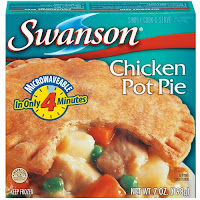
c.) immediate. why spend time on a thirty-minute meal when your microwave pot pie could go through all the stages of matter in four minutes?


so much of what we experience simply requires pressing a button. survival, however is day by day; no, as a population we haven't adapted to keep up with what we've created and maintained.

I made these the other day, they are vegan and gluten-free.

but i didn't take pictures because i wanted to avoid pushing buttons. these are taken from the website (link embedded in the images):


now here i come, pressing an alphabet.

Purkinje fibers could be a good band name.

Wednesday, June 24, 2015

Shamir//expectations//extraordinary

"It doesn't get darker unless you expect it to."

https://www.youtube.com/watch?v=0XoGrh9eL9Y


A few posts back, we discussed "the banality of evil," a term coined by Hannah Arendt. 
It refers to the simplicity of "evil" acts; sometimes people kill others for the sole purpose of making money.
Adolf Eichmann, who Hannah Arendt observed during his 1961 trial in Jerusalem, organized the Nazis' train schedules--he planned the shipment of prisoners to concentration and extermination camps. 

But what if he wasn't ideologically committed to Third Reich maxims? What if he didn't believe in the superiority of the Aryan race?

Does that make him any less evil than Reinhard Heydrich, Reichsprotektor or head of the Protectorate of Bohemia and Moravia (modern-day Czech Republic), who spoke outright of the inferiority of all other races?

Is Adolf Hitler "evil" for what he did?
He rationalized his ideologies in his head. They made sense, somehow.

What if these three men committed "evil" for everyday reasons, just like someone mugging another on the street, trying to make some cash to feed a family?

I don't condone these crimes; I just think it's important to look at them through more than one dimension, and not to hasten characterizing the wholes of individuals by their acts.

We are much more intricate than that.

And I put evil in "" because I don't know what to call it.

ANYWAY

Today on an elevator, thinking of Arendt, I thought,
banality of good.

Think about it. On streets we pass samaritans and CEOs, hear them talk on phones. These two archetypes have done "good" in two archetypal ways. They have:

1.) Saved lives/supported others through struggle, even in the smallest ways (I'll call this "humanitarian good")
2.) Become financially successful and/or societally esteemed (and this, "the capitalist's good"...lol)

Again, these people are everywhere. Maybe I'm preoccupied with anonymity because I'm back in New York City.

And I'm distancing myself from humanity (and hoping that you, the reader do so for the remainder of this post, too) because I dig writing like I'm not part of humanity; like I'm a wide-eyed observer. 

We all observe, and often respond with inflections of the tongue or compassionate countenances. I'm responding with a manifesto.

 So, these particularly exceptional people--we may overhear them complaining to their mother on the phone, gossiping to a friend on a park bench, whispering under the sandpapering of leaves--exceptional people don't have to be exceptional all the time, and that fascinates me.

Or we may see a billionaire drop his Mister-Softee-vanilla-sprinkly-cone on cement, get showered by the Washington Square Park fountain, be unable to conceal her sweaty pits.

How can someone who's succeeded in life, done something many college kids I know are anxious about (made money), be so...normal. It doesn't match my gleaming idea of 

(I love you stock)

Not that I value the title "CEO" above any other financial status/vocation. The extreme success of its reputation, however, fits to dispel my illusions with the greatest magnitude; the name makes the banality of good, or normalcy, pure humanity of the "good" individual, even more banal.

The tugs between society and the individual.

Is good banal, then? Is anything banal?

Recently I read a quote: "Their lives would have been an art of living" (Perec, 23).

How is any moment less than extraordinary?

The fact that I ask this question leads me to reason one of my greatest pet peeves.

when I hear life brushed off like it's nothing, I feel dehumanized, dirty, saggy, wrong.
But I brush it off, too.

"How was your day?"
"Eh, whatever."

Maybe I'm afraid that it really is whatever.

Always, though, I come back to the extraordinaries.
Those who have done "good," but act like anyone else.
The contrasts between reputation and person are extraordinary.
Maybe we brush off life because we're subconscious and self-conscious; we know how extraordinary it could be if we just went about seeing it differently.

IF we allowed ourselves to relish in the ordinary. Anything can become ordinary if we forget to call it extraordinary.
"oh, I work for the CIA, no biggie."
as a child that was your dream, and now you do it.

for hours you fantasize of lunch, and then you eat it.

you interview for 27 jobs, and score the one you most wanted.
then you go to work.

If we stood forever awestruck at the incarnation of illusion, I guess we wouldn't get much work done.

But I got this done.

We're all extraordinary, then. This is the only logical conclusion. Sorry.

how I remind myself to practice "the art of living":

it's rice and tomatoes. 

"it doesnt get darker unless you expect it to."

Works Cited

Perec, Georges. Things: A Story of the Sixties. (David R. Godine: Boston, 1990).